OVERVIEW AND REGISTRATION PAGE
Schedule:
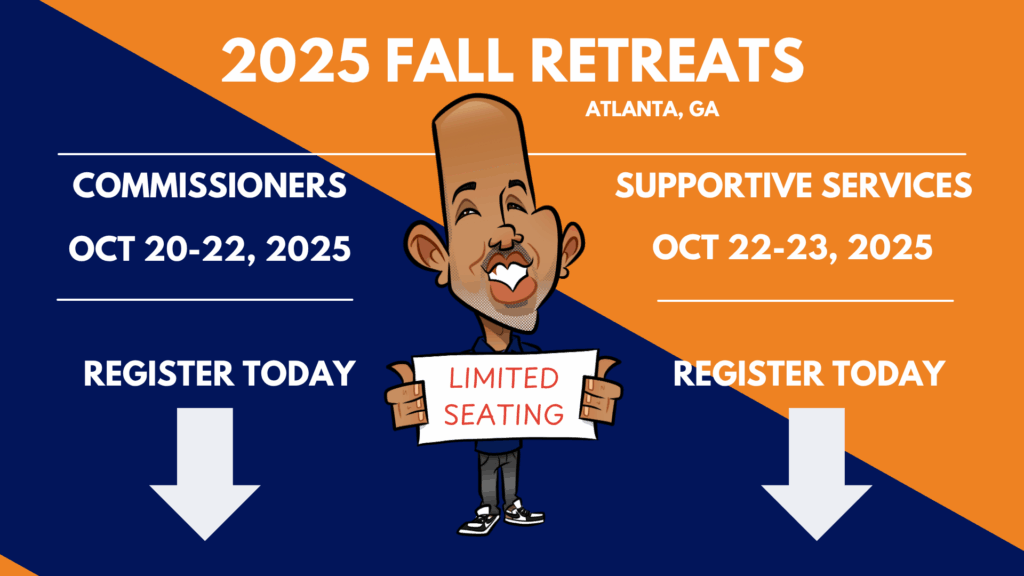
Date: October 20-22, 2025
Time: 9:00 am – 4:30 pm
Location:
Renaissance Waverly Convention Center
2450 Galleria Pkwy, Atlanta, GA 30339
Description:
Commissioner’s training for Public Housing Authority (PHA) Commissioners is a comprehensive orientation and strategic leadership development program designed to equip board members with knowledge, skills, and ethical framework needed to effectively govern and support the operations of a housing authority. Training covers essential topics such as roles and responsibilities of commissioners, HUD regulations and compliance, financial oversight, strategic planning, and the importance of resident engagement. It emphasizes sound governance, fiduciary duty, and informed decision-making to ensure that commissioners are prepared to uphold the mission of providing safe, affordable housing while fostering accountability, transparency, and long-term sustainability for the communities they serve.
Who should attend:
PHA Board of Commissioners
Individual Rate: $1,500.00
Note: Prior to purchasing, please review the cancellation policy.
COMMISSIONER SESSION TOPICS
1. NEXT GENERATION HOUSING NEEDS & NEXT LEVEL LEADERSHIP
This session is designed to challenge and inspire Commissioners to move beyond basic governance and embrace visionary, strategic leadership in their roles. This interactive training explores how board members can leverage their positions to drive innovation, foster public-private partnerships, advocate for policy change, and support organizational transformation in affordable housing. Emphasis is placed on leadership styles, emotional intelligence, effective collaboration with executive staff, and navigating complex challenges in housing and community development. Participants will examine real-world case studies, engage in strategic thinking exercises, and identify actionable ways to elevate board performance and impact. The session empowers Commissioners to lead with purpose, influence, and a long-term perspective that aligns with the mission and future of the housing authority.
2. ROLES & RESPONSIBILITIES
The session provides an in-depth overview of the legal, ethical, and functional duties of Public Housing Authority board members. Participants will explore the foundational principles of governance, including fiduciary oversight, policy development, and strategic leadership. The session distinguishes the governance role of Commissioners from the management responsibilities of staff, emphasizing the importance of setting vision and direction without interfering in day-to-day operations. Key topics include compliance with HUD regulations, adherence to open meeting laws, conflict of interest avoidance, and the collective nature of board decision-making. By the end of the session, Commissioners will understand how to effectively fulfill their duties with integrity, accountability, and a focus on serving the needs of residents and the broader community.
3. THE IMPORTANCE OF PUBLIC PRIVATE PARTNERSHIPS
This session explores how collaboration between housing authorities and private sector entities can expand resources, accelerate development, and improve outcomes for residents. Commissioners will learn how PPPs can be leveraged to finance and modernize affordable housing through tools such as Low-Income Housing Tax Credits (LIHTC), New Markets Tax Credits (NMTC), and mixed-finance models. The session highlights the strategic role of the board in approving and overseeing such partnerships, ensuring transparency, community benefit, and alignment with the agency’s mission. Through case studies and interactive discussion, participants will gain insight into risk management, due diligence, and governance considerations essential to successful partnerships. This session empowers Commissioners to support innovative, sustainable approaches to affordable housing through effective collaboration with the private sector.
4. FINANCE FOR COMMISSIONERS
The session on Finance for Commissioners equips board members with a foundational understanding of public housing authority finances to support informed oversight and responsible decision-making. Participants will learn how to read and interpret key financial documents, including budgets, financial statements, audits, and HUD-required reports. The session covers essential topics such as revenue streams (e.g., operating subsidies, capital funds, Housing Choice Vouchers), expense tracking, reserves management, and financial compliance. Commissioners will explore their role in approving budgets, monitoring financial performance, and asking the right questions to ensure fiscal accountability and sustainability. Special attention is given to understanding risk, funding cycles, and how financial decisions align with strategic goals. This session empowers Commissioners to engage confidently in financial matters and uphold their fiduciary responsibility to the agency and its stakeholders.
5. PHA REDEVELOPMENT FOR COMMISSIONERS
The session on PHA Redevelopment for Commissioners provides an essential overview of the planning, financing, and execution of redevelopment initiatives within public housing authorities. This session introduces Commissioners to key concepts such as repositioning, demolition and disposition (Section 18), the Rental Assistance Demonstration (RAD), and mixed-income and mixed-finance development models. Participants will learn how redevelopment projects can improve housing quality, leverage private investment, and revitalize communities while ensuring long-term affordability and resident protections. The session highlights the board’s role in setting redevelopment priorities, reviewing development proposals, and ensuring transparency and community engagement throughout the process. By the end of the session, Commissioners will have a clearer understanding of how redevelopment supports the agency’s mission and what strategic leadership looks like in transformative housing initiatives.
6. THE BOARD’S DASHBOARD: UNDERSTANDING METRICS THAT MATTER
The session will equip Commissioners with the knowledge to interpret and use key performance data to effectively oversee Public Housing Authority operations. Participants will explore critical indicators such as occupancy rates, rent collection, unit turnaround time, and voucher utilization, with a special focus on HUD’s performance assessment systems—PHAS (Public Housing Assessment System) for public housing and SEMAP (Section Eight Management Assessment Program) for the Housing Choice Voucher program. The session will explain how these systems evaluate agency performance across areas like financial management, physical condition, and program compliance. Commissioners will learn how to use dashboards and reports to monitor these metrics, ask informed questions, and ensure that strategic goals are met. This training reinforces the importance of data-driven governance and empowers Commissioners to make impactful, accountability-focused decisions.
7. MAXIMIZING IMPACT: LEADING AFFORDABLE HOUSING WITH LIMITED RESOURCES
This session is designed to help Commissioners understand how to guide their housing authority through financial constraints while still achieving meaningful outcomes for residents and communities. This session explores strategies for maximizing impact through innovation, collaboration, and strategic prioritization. Topics include leveraging federal and state funding, pursuing grants and alternative financing, building effective public-private partnerships, and making data-informed decisions that align limited resources with high-impact initiatives. Commissioners will also learn how to support staff in doing more with less, maintain compliance, and sustain service delivery without compromising quality. Through case studies and practical tools, this session empowers board members to lead with vision, resilience, and creativity in challenging funding environments.
8. EXAMINING CASE STUDIES IN BOARD LEADERSHIP
The session Examining Case Studies in Board Leadership offers Commissioners an opportunity to analyze real-world examples of effective and challenging governance within public housing authorities. Through interactive discussion of diverse scenarios, participants will explore best practices in decision-making, conflict resolution, ethical leadership, and strategic oversight. The session highlights lessons learned from successes and setbacks, helping Commissioners understand how strong board leadership directly impacts agency performance and community outcomes. This practical approach equips board members with insights and tools to enhance their own leadership effectiveness.
SUPPORTIVE SERVICES RETREAT
Description
This dynamic, in-depth training is designed specifically for PHA professionals and Resident Council Officers who are committed to enhancing the quality and effectiveness of supportive services in public housing opportunities. This retreat-style training blends regulatory guidance, real-world case studies, and interactive learning. Participants will leave with a clear understanding of HUD compliance requirements, best practices in program operations, strategic engagement, and tools to strengthen both Resident Services departments and Tenant Council leadership. This retreat emphasizes hands-on learning, peer exchanged, and real-time application of concepts.
Who Should Attend:
- PHA Resident/Supportive Services Staff
- FSS and ROSS Coordinators
- Executive and Mid-Level PHA Leadership
- Section 3 Coordinators
- Resident Council Officers & Resident Leaders
- Case Managers and Program Coordinators
Individual Rate: $1,000.00
SESSION TOPICS
1. GRANT WRITING & RESOURCES
Learn how to identify, pursue, and manage HUD and non-HUD grant opportunities that support resident services, housing stability, and economic mobility. This session will guide attendees through aligning funding requests with community needs and program goals. It will also cover effective grant tracking, compliance documentation, performance reporting, and how to demonstrate program impact to strengthen future applications and funding sustainability.
2. FSS & ROSS PROGRAM MANAGEMENT
Explore the federal requirements, compliance benchmarks, and real life implementation strategies for managing successful FSS and ROSS programs. This session will cover best practices in participant engagement, performance metrics, staff roles, escrow administration, and effective reporting. Participants will leave with tools to improve program outcomes, increase graduation rates, and foster long-term financial independence for residents.
3. TRAUMA-INFORMED CARE PROGRAMS
Discover how to integrate trauma-informed practices into resident services to promote safety, empowerment, and healing. Attendees will learn about the principles of trauma-informed care, culturally responsive programming, and how to create supportive environments for residents who have experienced adversity. The session, conducted by a licensed therapist, will also explore how trauma-informed models can be embedded into case management, resident engagement, and staff training protocols.
4. EFFECTIVE CASE MANAGEMENT
Strengthen your agency’s case management system with a deep dive into resident-centered planning, service coordination, and documentation. This session will emphasize building trust, setting realistic goals, connecting residents to appropriate resources, and tracking progress over time. Participants will learn how to improve outcomes and ensure compliance with HUD standards through effective use of assessments, case notes, follow-up, and internal monitoring.
5. SECTION 3 COMPLIANCE
Get a practical overview of HUD’s Section 3 regulation under 24 CFR Part 75 and its impact on PHAs. Attendees will learn how to implement effective strategies to meet employment, training, and contracting goals for low- and very low-income residents. This session will offer actionable strategies to build partnerships with local businesses, create resident workforce pipelines, and document “best efforts” even when numerical goals aren’t met.
6. COMMUNITY & RESIDENT ENGAGEMENT
Explore proven methods to foster authentic resident engagement and build community trust. Participants will learn to conduct needs assessments, host inclusive meetings, and implement strategies that amplify resident voice and leadership. This session also highlights ways to support resident-led initiatives, build partnerships with community stakeholders, and increase participation in services through creative outreach and communication.
7. RESIDENT COUNCIL OPERATIONS
Understand the full scope of responsibilities and regulatory requirements for Resident Councils under 24 CFR § 964. This session will address council structure, election processes, use of Tenant Participation Funds, and required documentation. It also explores the importance of strong collaboration between PHAs and resident leaders to drive meaningful community improvements.
8. RESIDENT CASE STUDIES
Through guided, real-world scenarios, attendees will apply concepts in resident support, case management, and crisis navigation. Participants will practice identifying resident needs, building service plans, making referrals, and managing challenges using a strengths-based, solution-oriented approach. This hands-on session will improve decision-making, critical thinking, and teamwork across departments.
*Topics may be modified
Seating is limited, register today!
Registration: Please submit for each participant
LODGING
Renaissance Waverly Convention Center
2450 Galleria Pkwy, Atlanta, GA 30339
To secure your room please go to the link below to reserve:
Hotel Reservation Link – Click Here